EWR to CDG Turbulence Forecast
Is the Newark to Paris flight turbulent? Live forecast & historical patterns.


Typical turbulence along the route
Historical average pattern for EWR–CDG
About the EWR–CDG route
The Newark to Paris route crosses the North Atlantic, where the jet stream is the primary source of turbulence. Flying at 37,000 feet, the aircraft encounters the strongest bumps roughly 2–5 hours into the flight. This is clear-air turbulence — no clouds, no visual warning — which makes a pre-flight forecast especially valuable.
The route is served by United Airlines, Air France on Boeing 767 · Boeing 787 aircraft, with flights typically cruising at 37,000 feet over a distance of 3,453 miles (3,000 nautical miles).
💡 Tip: Turbulence peaks mid-flight over the Atlantic. First and last hour are usually smooth.
Turbulence levels on EWR–CDG
What to expect at each phase of the flight
Get minute-by-minute timing for your specific flight
Download on the App Store — FreeBest time to fly EWR–CDG
Turbulence by month
Best seat on EWR–CDG
Boeing 767
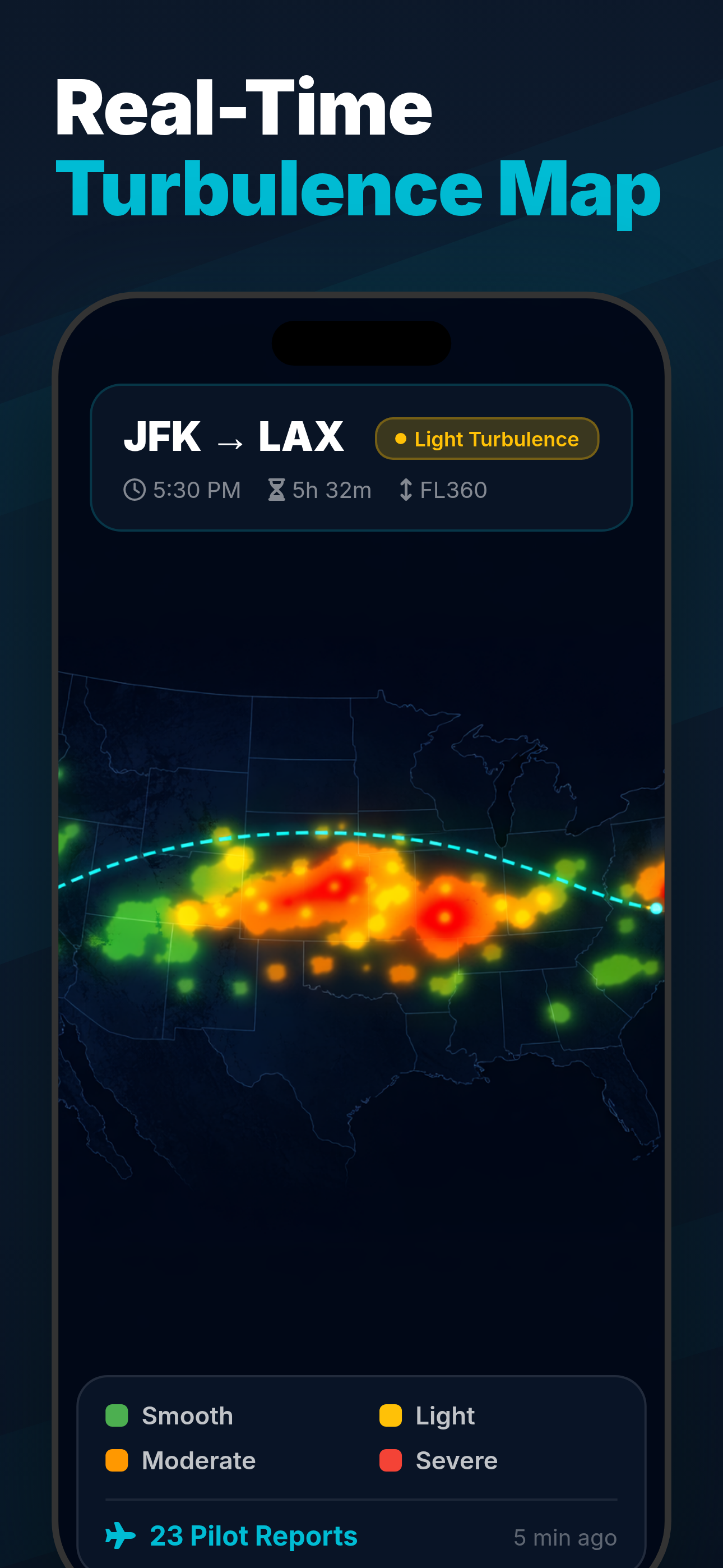
What you'll see in the app
Full forecast, live map & seat recommendations

Similar routes
Other popular routes with turbulence data